Co-Authored By: Kendall R. Phillips & Corri Zoli, Syracuse University’s Lender Center for Social Justice
Syracuse University’s Lender Center for Social Justice was founded in 2018 with a goal of harnessing the University’s research capacity towards promoting social justice—a concept we define broadly, inclusively, and with a focus on community voices. While the Center regularly works nationally and globally, over the past several years, we have been working to develop local, community-engaged collaborations, involving our Lender faculty and student fellows, researchers, and interns at every stage. These community collaborations and conversations have led us to initiate projects specifically requested by the community and designed to support the needs of our community-based organizations and partners.
Recognizing the complicated history universities can have with their surrounding communities, the Lender Center has focused on listening, learning and building genuine partnerships. Our research is guided by community needs and designed to provide immediate value to our partners, rather than simply advance our own interests. Now entering its fourth year, our Community Engagement work has built strong relationships, supported community events and connected students with meaningful research that produces practical results.
As we reflect on this broader research initiative, we have identified one central problem that we are trying to help overcome: fragmentation.
Our region is facing growing needs for housing, food, health and wellness, education, workforce development and other essential services at a time when resources are shrinking. Human service organizations are being asked to do more with less, often working in silos while focused on immediate needs. A stronger, more connected community of care could help change that. By building relationships across sectors and creating better ways to share information, communicate and collaborate, organizations can use resources more efficiently, provide more coordinated support and develop stronger long-term solutions for individuals, families and the broader community.
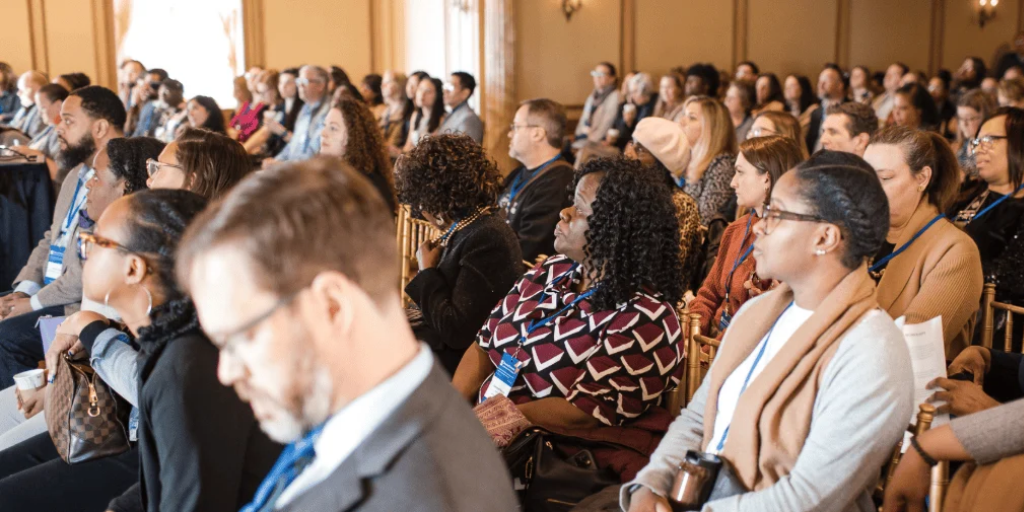
Working with many wonderful thought partners, including the Central New York Community Foundation, the Lender Center has developed two concrete initiatives aimed at fostering this kind of comprehensive community network for information sharing. One is the Lender Expo, an annual convening of nonprofits designed to create a kind of integrated space. The Lender Expo works to integrate horizontally, by bringing together nonprofits working in a wide variety of sectors, and vertically, by offering programs for all levels within a nonprofit organization. As we prepare for our third annual Lender Expo, scheduled for March 23-24, 2027, at the Marriott Syracuse Downtown, we are working to expand the programming and create spaces for the development of new and impactful collaborations, including by CNY faith communities, among others.
Developing these kinds of collaborations, however, requires more than just relationships and dialogue, it requires good information. Unfortunately, data is also an area rife with fragmentation. This fragmentation is caused by many things. There is, in some ways, too much data, hundreds of dashboards, websites, and reports. The availability of this data does not necessarily mean it is more accessible. Much of the readily-available data is packaged in technical terms that require specialized knowledge to access and interpret. All this technical data can be overwhelming—and AI tools have only increased the deluge. And, of course, we are also living in an age rife with misinformation and the new danger of AI delusions that can present fake information in attractive packages.
In our effort to help create better access to reliable information, the Lender Center has created the Lender Data Integration Portal. This site aspires to be a ‘one-stop data shop’ for our nonprofit organizations. Some of the key features are: a robust “Additional Resources” page that includes links to many other great data sites, including CNY Vitals and CNY Vitals Pro; a series of data dashboards that allow for a deep dive into some of our region’s most crucial issues, including poverty, housing, employment, and education. We are excited to hear feedback about the Lender Portal and work with our many community partners to make it as useful and impactful as possible.
Our region, as we all know, is at the beginning of unprecedented change. The pressing questions of the moment are: How do we as a broad and diverse Central New York community meet these dynamic challenges as they come home to and transform our region, especially as Micron’s megafabs get up and running? And as billions of dollars are invested in our transportation infrastructure, from removing the Interstate 81 viaduct in downtown Syracuse, which divided communities, and replacing it with the new Community Grid?
How will our community manage the needs—housing, workforce development, traffic and air quality issues, thousands of new projected Central New Yorkers—brought on by new planned economic activity, new businesses, and new projected opportunities, as well as costs? How do we make sure that all community members, including those historically underserved, thrive in this period of “rust-belt” renewal?
Responding to these crucial questions will require a cohesive community committed to collaboration, inclusion, and opportunity. The Lender Center believes that such a cohesive communal response is possible even as it requires strong relationships and accessible information. We are proud of the collaborations we have developed over the past 8 years and excited about the future. If you have any interest in joining our projects in any capacity, reach out to the Lender Center: we are always looking for new partners!
Kendall R. Phillips, Ph.D. serves as Director of the Lender Center for Social Justice. He is a Professor of Communication and Rhetorical Studies at Syracuse University.
Corri Zoli, Ph.D. is a Research Associate at the Lender Center for Social Justice. She is a faculty affiliate at Syracuse University’s Forensic and National Security Sciences Institute and a co-investigator at the Intelligence Community Center of Excellence.